Dermaplaning Consent Form: What to Include (Free Template)
What a dermaplaning consent form should cover, from retinoids and Accutane to active acne, cold sores, recent peels and a signed release, with a free printable template.
Why dermaplaning needs a consent form
Dermaplaning looks gentle, but it means holding a sterile surgical blade against a client's face to remove dead skin cells and fine vellus hair. On the right skin it leaves a smooth, bright surface that soaks up products and takes makeup beautifully. On the wrong skin, such as skin thinned by retinoids, inflamed by active acne or freshly treated with a peel, it can cause nicks, rawness, breakouts and irritation that lasts for days.
A signed consent and intake form shows the client told you about their skincare, medications and health before you started, understood the normal risks and agreed to follow aftercare. It helps you decide whether to go ahead, adjust the service or reschedule, and it protects your business if a reaction or complaint comes up later. Many insurers and some local boards expect estheticians to keep one on file for every client.
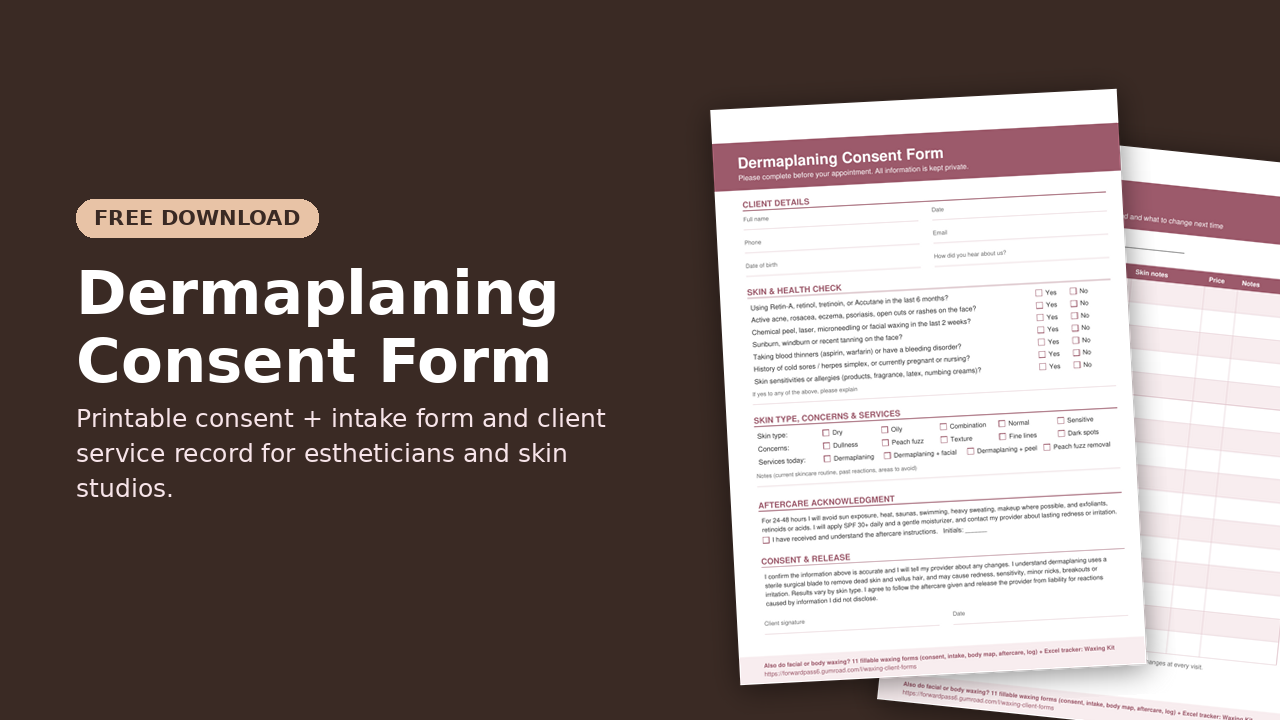
Free Dermaplaning Consent Form
A printable dermaplaning consent and intake form plus a client service record.
Download free →What to include
- Client details: name, phone, email, date of birth and how they found you
- Retinoids and Accutane: Retin-A, tretinoin or retinol use, and Accutane (isotretinoin) in the last 6 months, since both thin the skin and raise the risk of irritation
- Active skin conditions: acne, rosacea, eczema, psoriasis, open cuts or rashes on the face, which you should work around or postpone
- Recent treatments: chemical peels, laser, microneedling or facial waxing in the last 2 weeks
- Sunburn, windburn or recent tanning on the face
- Blood thinners or bleeding disorders, since even a small nick can bleed more
- Cold sores: a history of herpes simplex, as facial treatments can trigger an outbreak
- Pregnancy or nursing, especially if you plan to add a peel
- Allergies and sensitivities: products, fragrance, latex and numbing creams
- Skin type and concerns: dry, oily, combination or sensitive, plus dullness, texture or peach fuzz
- Service today: dermaplaning on its own, with a facial, with a peel, or peach fuzz removal
- Aftercare acknowledgment: SPF, no exfoliants or retinoids for 24 to 48 hours, no heat or heavy sweating
- Risks in plain words, a release, and the client's signature and date
Aftercare to put in writing
Most problems after dermaplaning come from what the client does in the next two days. Ask them to skip sun exposure, saunas, swimming and intense workouts for 24 to 48 hours, avoid scrubs, acids and retinoids for a few days, wear SPF 30 or higher every day and use a gentle moisturizer. Have them initial that they received these instructions so there is no confusion later.
Record every session
Use a client service record to log the date, service, products used, how the skin looked before and after, and the price. Spacing sessions 3 to 4 weeks apart lets the skin recover, and checking the record before each visit makes it easy to spot new medications, a recent peel or a past reaction. Re-ask the health questions at every appointment, because skincare routines and prescriptions change.
Grab the free printable dermaplaning consent form to get started. If you also offer facial or body waxing, the Waxing Client Forms Kit adds 11 fillable forms and an Excel client tracker. This guide is general information, not legal or medical advice, so check the licensing and consent rules where you work.
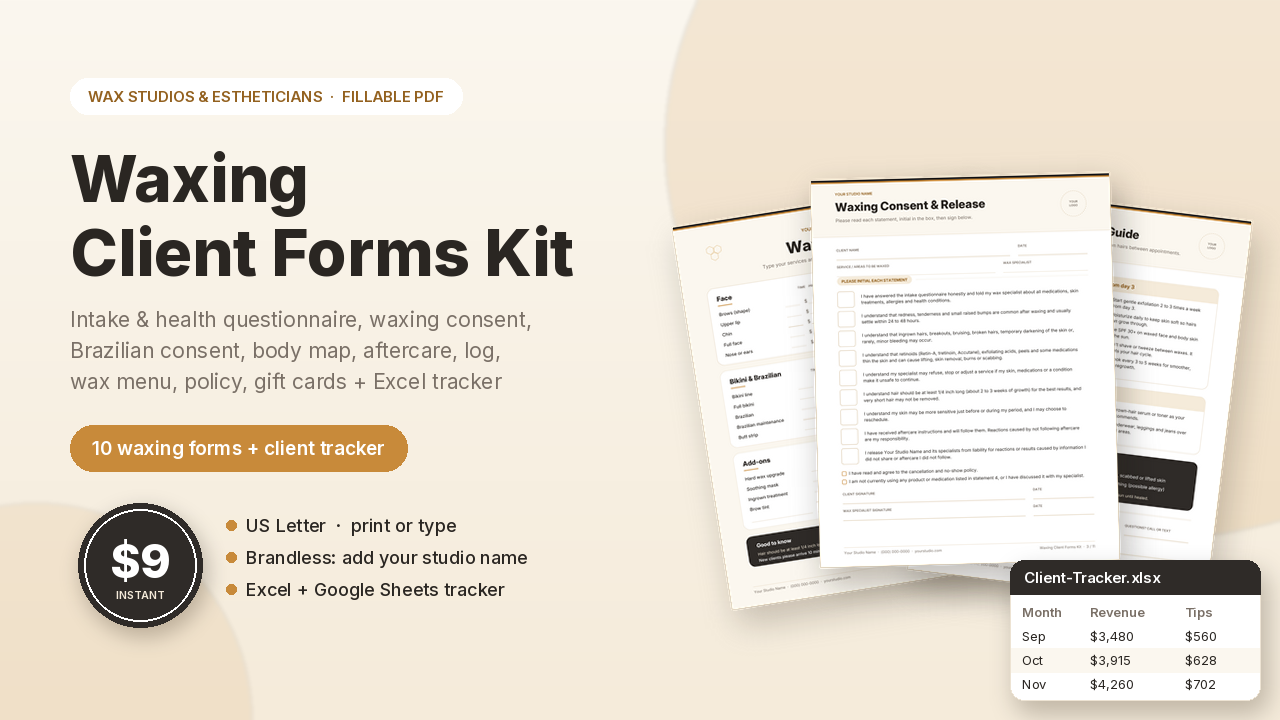
Waxing Client Forms Kit
11 fillable waxing forms (consent, Brazilian add-on, body map, aftercare, appointment log) plus an Excel client tracker.
Get it →Related templates
Free Dermaplaning Consent Form
A printable dermaplaning consent and intake form plus a client service record.
Download free →Waxing Client Forms Kit
11 fillable waxing forms (consent, Brazilian add-on, body map, aftercare, appointment log) plus an Excel client tracker.
Get it →